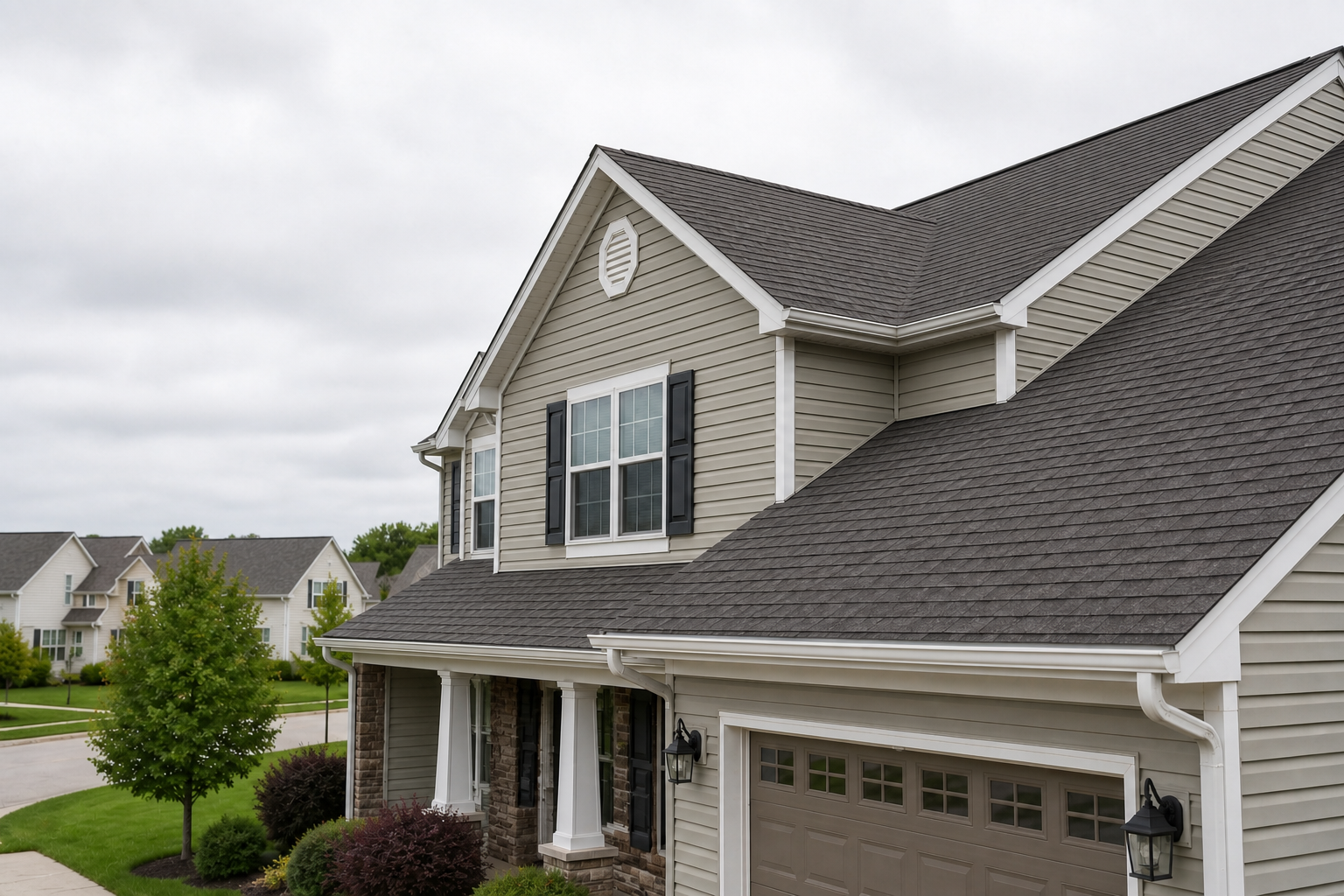
What an inspection is for
Buyers ask for one when a home inspector flags the roof but cannot say how many years it has left. Sellers ask for one before a listing goes live, so a negotiation over roof condition does not surface for the first time during closing. Homeowners ask for one after a named storm, or simply because they want to know whether to budget for a new roof in two years or ten.
In every case the deliverable is the same. A report that states what the roof is, how old it appears, what condition it is in, and how many years of service remain if any needed repairs get made.
What gets examined
The attic comes first. Staining, mold, daylight showing through gaps, and the ventilation setup all get recorded, since attic conditions tell as much about a roof's health as the shingle surface does. Then the roof gets walked where the pitch allows and viewed closely where it does not.
On the roof itself, shingle age and granule loss, seal strip condition, flashing at every penetration, valley condition and gutter pitch all get noted, along with any evidence of past repair work.
The remaining life estimate
The estimate is given as a range with the reasoning attached. A roof past twenty years old on a south facing slope with visible cracking is near the end of its service life. A roof twelve years old inland with sound seals and one worn pipe boot has plenty of years left after a small repair. The report explains which specific findings moved the number one way or the other.
How the report gets used
For a home sale, the report is formatted so it can be shared with a buyer's agent or attached to disclosure documents. For an insurance renewal, it covers the details a carrier typically asks about on a roof over a certain age: material, layer count, visible damage and general wind fastening condition.
For a storm claim, the review documents pre-existing condition separately from new storm damage, since that distinction is where most of an adjuster's attention goes.