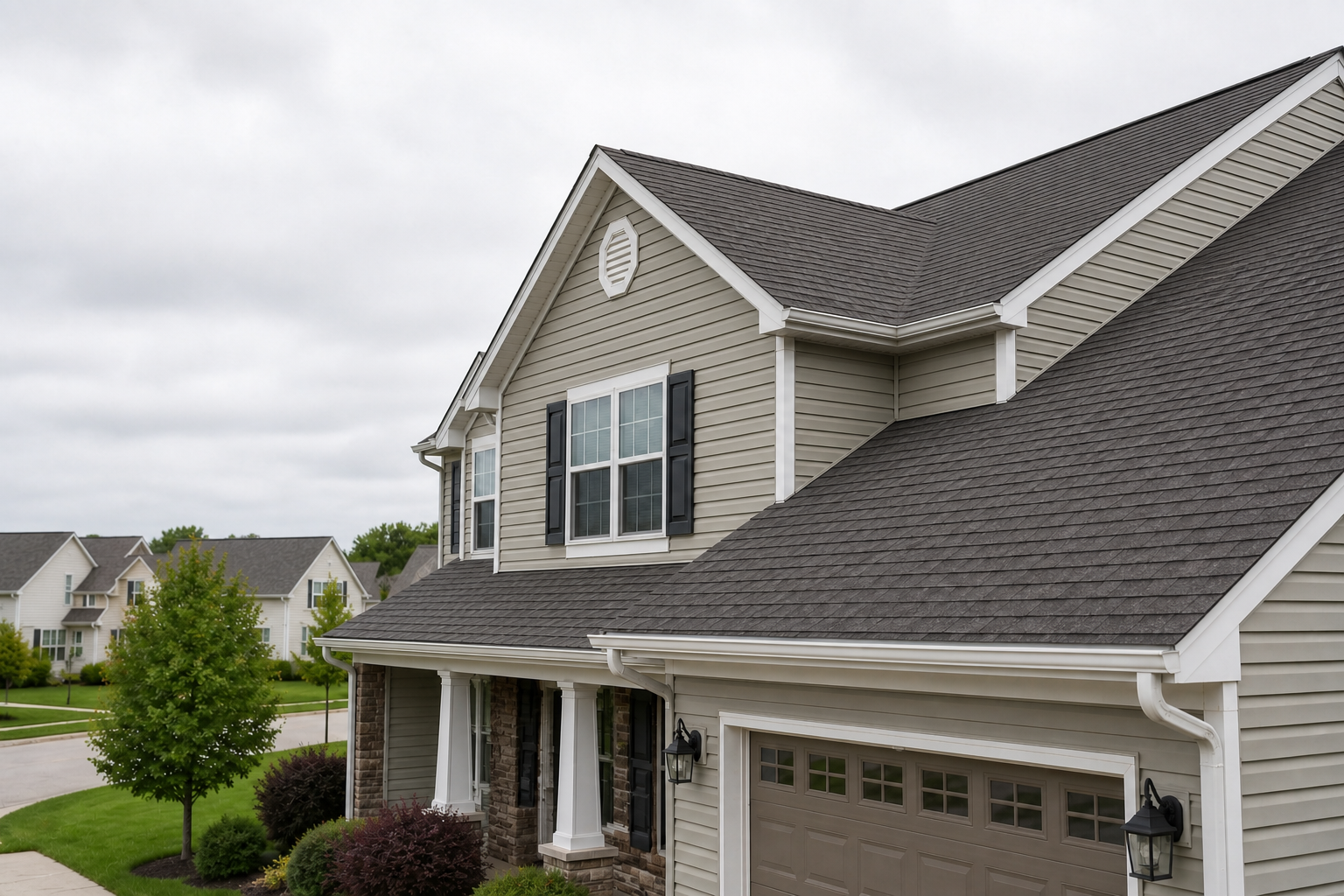
Why the attic comes before the shingles
We climb into the attic on almost every inspection, not just the ones where a leak already showed up. A hot, still attic in July does more damage to a roof deck than most homeowners realize, and it works from underneath where nobody sees it until the shingles start to fail early.
Heat trapped under the roof deck softens the asphalt in a shingle from below at the same time the sun is baking it from above, which is why we treat the attic as part of the roof, not a separate system.
What we find blocking the soffit vents
Soffit vents pull cooler air in from under the eaves, and on a lot of the homes we work on around Wilmington, those vents are half buried under blown in insulation from a past attic job. Once the intake side is blocked, the ridge vent up top has nothing to pull from and stops doing its job.
We also see soffit vents painted shut or built over by a wasp nest that has been growing for a couple of seasons. Any one of those turns a working ventilation system into a decoration.
Ridge vents, box vents, and what actually balances
A continuous ridge vent paired with clear soffit intake is the setup we recommend on most reroofs, because it moves air along the whole length of the roof instead of pulling from one spot. Box vents can work, but only if there are enough of them spaced correctly, and we have pulled plenty off older roofs that had two doing the job of six.
The signs we look for from the ground and in the attic
From the ground, uneven shingle wear in patches, usually toward the top of a slope, is often a ventilation problem rather than a bad batch of shingles. Inside the attic, dark staining on the underside of the deck or insulation that feels damp to the touch points the same direction, and none of it means the roof needs to be replaced early.
What we actually do about it
The fix is usually smaller than homeowners expect. Clearing existing soffit vents, adding a few more where the eave allows it, or swapping a handful of box vents for a proper ridge vent covers most of what we run into, and we write it up as its own line item with a reason attached, not as an upsell tacked onto a repair.
On a full reroof, we check the ventilation math before the old shingles come off, since it is easier to get the intake and exhaust right while the deck is already exposed.